Homepage » Applications » CDF Test

CDF test: Standardised determination of the frost and de-icing salt resistance of concrete

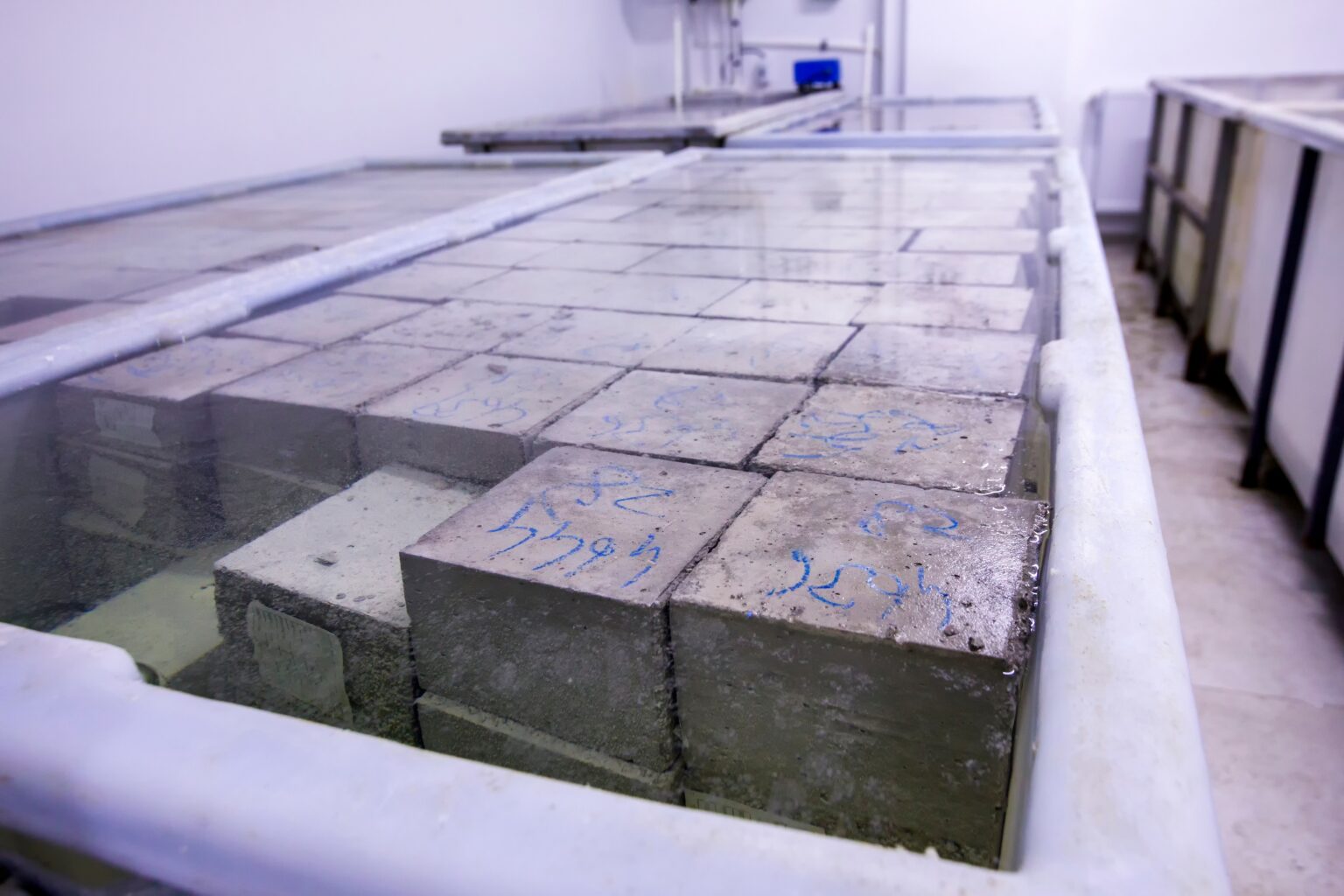
The CDF test, which stands for ‘Capillary Suction of De-icing Chemicals and Freeze-Thaw Test’, is a European reference method in accordance with CEN/TS 12390-9. In conjunction with the BAW technical note and DIN SPEC 91167, this test is used for quality control in the construction industry. It determines the resistance of the concrete surface to mass loss caused by weather conditions. In winter, concrete structures are subjected to severe stress caused by the capillary suction of de-icing salt solutions and subsequent periods of frost.

Accurate evaluation of the CDF test requires the complete removal of concrete particles loosened by frost from the surface of the test specimen. As mechanical methods damage the intact structure and distort measurement results, the test standards strictly require the use of ultrasound. BANDELIN’s high-performance ultrasonic baths provide the required operating frequency and cavitation power to separate these particles from the test specimen in accordance with the standards. This ensures that the actual loss in mass can be reliably measured for laboratory analysis.

Equipment that complies with standards is essential for producing reliable test reports in a building materials laboratory. Identify the appropriate ultrasonic technology for your planned testing capabilities.
Contactless particle release in the test fluid

The normative requirements of CEN/TS 12390-9 and the BAW guidance note define the test cycle as exactly 28 freeze-thaw cycles. Following this standardised exposure phase in a 3 per cent sodium chloride solution, loose particles accumulate on the surface of the specimen. These particles must be completely removed and weighed to ensure a correct analysis. Mechanical methods damage the intact concrete structure and distort the measured mass loss. The test guidelines therefore require the use of ultrasound to dislodge the weathered components without contact.

For this indirect ultrasonic treatment, the ultrasonic bath is filled with tap water. To reduce the surface tension of the water and accelerate degassing, surfactant-containing preparations such as TICKOPUR R 33 are added. The mixture acts purely as a coupling medium. The ultrasonic waves penetrate this coupling fluid and the wall of the stainless steel test vessel with virtually no loss. The cavitation responsible for particle detachment occurs inside the vessel, directly in the test solution on the surface of the concrete specimen. The BAW technical data sheet defines a maximum weathering loss of 1,500 grams per square metre following completion of these 28 cycles as the acceptance criterion for very high resistance to frost and de-icing salt.

Requirements of the test guidelines relating to equipment technology

Building materials laboratories must use testing equipment that accurately reflects the physical parameters specified in the regulation. The standards define narrow performance ranges. BANDELIN’s high-performance ultrasonic baths operate with fixed PZT transducers set at 35 kHz and thus meet the standard requirements for gentle material removal.

Characteristic Technical requirement Implemented by SONOREX
Operating frequency 35 kHz at 250 W ERS power Fixed PZT vibration systems
Sound field distribution Uniform removal SweepTec for continuous frequency modulation
Placement Minimum clearance of 15 millimetres from the ground Custom-fit hanging baskets and floor stands

Uniform removal with SweepTec

In ultrasonic baths without frequency modulation, standing waves are generated. These result in an uneven distribution of energy within the liquid bath. In building materials testing, this means that particles are dislodged more effectively in some areas of the concrete specimen than in others. BANDELIN’s SweepTec technology generates a homogeneous acoustic field through continuous modulation. The mass loss caused by freezing is measured uniformly across the entire test surface of the concrete specimen.

System solutions for throughput in building materials laboratories

Single-user examination

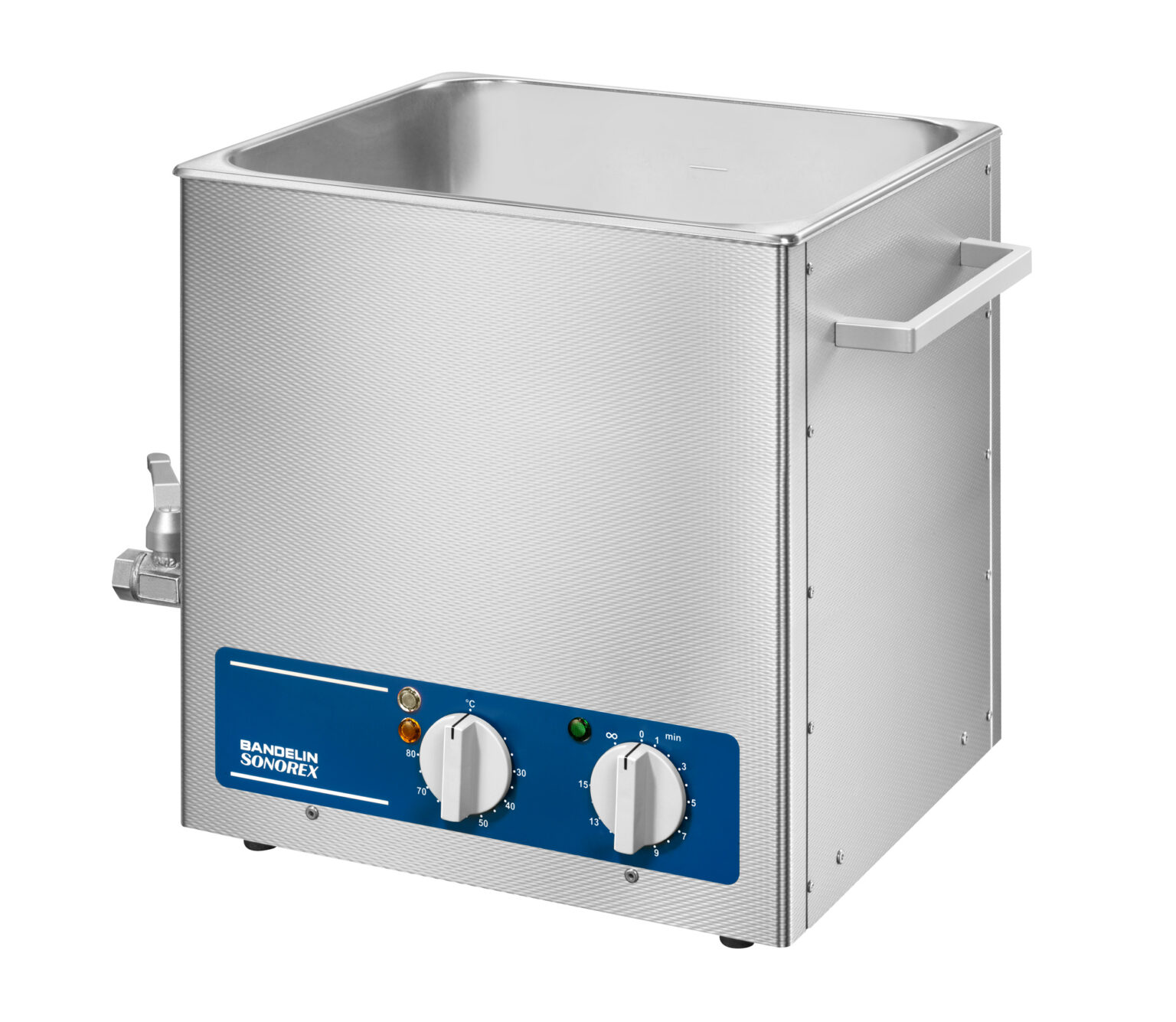
Thanks to the geometry of its basin, the SONOREX SUPER RK 514 BH model accommodates standardised test vessels for individual testing.

Multi-user testing

Larger industrial baths from the RM series can accommodate several test vessels simultaneously and ensure identical ultrasonic treatment conditions for high throughput.

Accessories

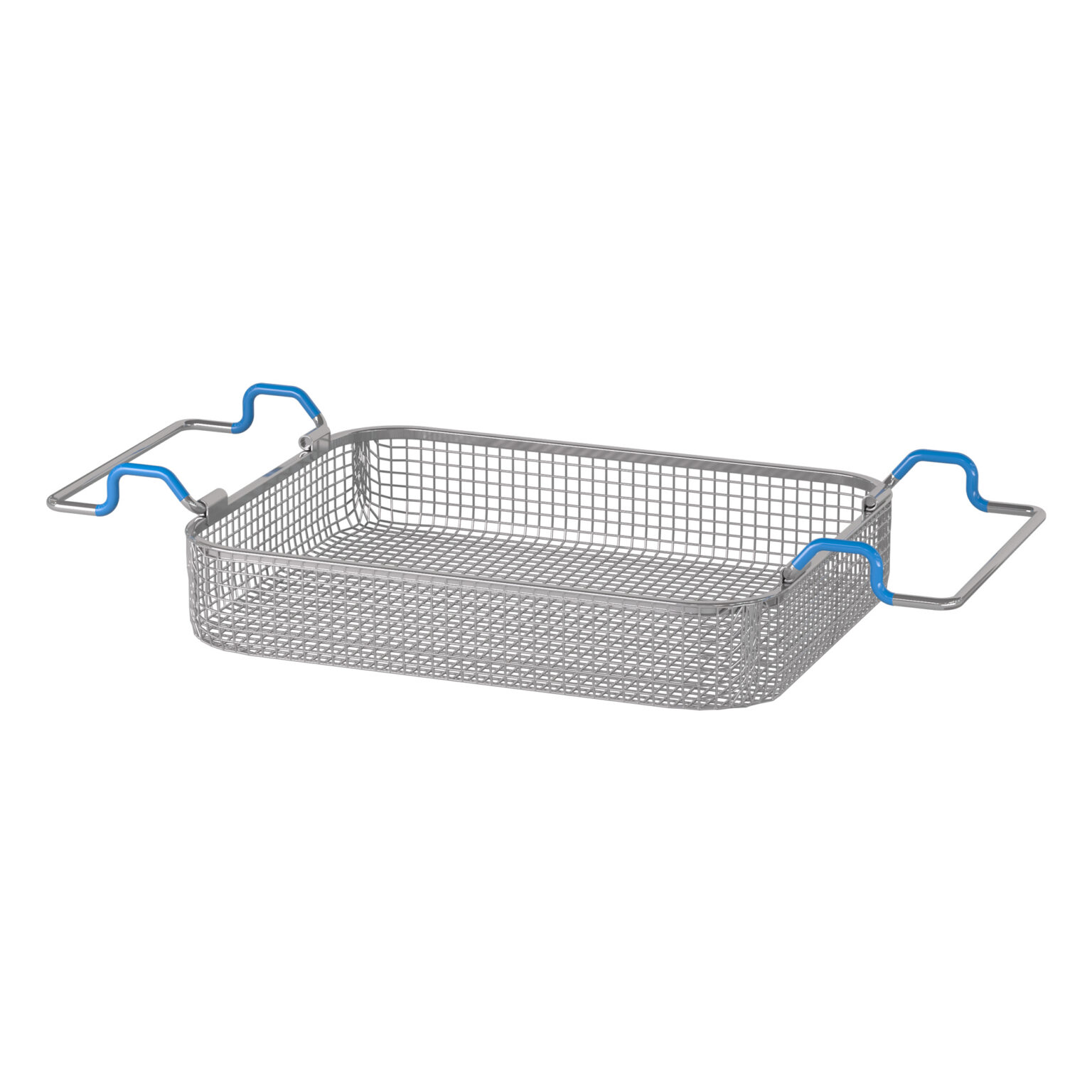
The specified ground clearance must be strictly observed. Suspended holders, e.g. baskets, prevent physical contact between the test vessel and the vibration tank. This ensures unimpeded sound propagation and protects the transducer from damage caused by reflections.

Carrying out the measurement

In order to remove loose, weathered material from the test surface at each measurement point during the CDF test, the test container is immersed in the transmission fluid of an ultrasonic bath and subjected to ultrasonic cleaning for three minutes. .

The test liquid, which contains the weathered material, is filtered off. The paper filter is then dried at (110 ± 5) °C for 24 hours and cooled for at least 1 hour at (20 ± 2) °C and (60 ± 10) % relative humidity. The mass of the filter, including the dried weathering products µb, is measured to an accuracy of ± 0.01 g.

Avoid measurement errors caused by unsuitable equipment. Discuss the exact configuration of your ultrasonic bath – including the mounting accessories required by the relevant standards – with BANDELIN’s application experts.

FAQ – Frequently Asked Questions about the CDF test using ultrasound

Concrete samples must not be brushed during the CDF test, as mechanical friction damages the intact concrete matrix and distorts the measurement of mass loss. Instead, the CEN/TS 12390-9 standard stipulates the use of non-contact particle detachment by means of ultrasound in order to measure only the material loosened by frost.

In the CDF test, a mixture of tap water and a surfactant-containing preparation such as TICKOPUR R 33 is used as the coupling medium in the vibrating tank. TICKOPUR R 33 reduces the surface tension of the water. This ensures that the ultrasonic waves are transmitted to the stainless steel test vessel used without any physical loss.

The CEN/TS 12390-9 standard requires a minimum distance of 15 millimetres between the stainless steel test vessel and the base of the tank to ensure unimpeded sound propagation in the coupling fluid. Direct contact prevents the sound field from developing and, due to reflections, causes damage to the PZT transducers of the ultrasonic device.

According to the specifications of CEN/TS 12390-9, the ultrasonic treatment during the CDF test lasts exactly three minutes. This precisely defined time span ensures that the dislodged particles are reliably released into the sodium chloride solution without damaging the intact concrete structure through excessive physical stress.

Frequency modulation prevents the formation of standing waves in the coupling medium of the ultrasonic bath. This technique is crucial for the CDF test, as it generates a homogeneous sound field. This ensures uniform cavitation and particle detachment across the entire test surface of the concrete specimen and rules out local measurement errors caused by uneven sound intensity.

Join us in

CONTACT

E-mail

info@bandelin.com

Give us a call!

+49 30 76880-0

Address

Heinrichstraße 3-4, 12207 Berlin

Bandelin Electronic

Quality since 1955

We - a Berlin-based family business in its third generation - specialise in the development, manufacture and distribution of ultrasonic devices, corresponding accessories and application-specific cleaning and disinfection preparations. The high vertical range of manufacture, a modern production facility and motivated employees distinguish us and are guarantors for constantly new quality products.

EN