Homepage » Applications » Cleaning disc knives, saw blades and milling cutters using ultrasound

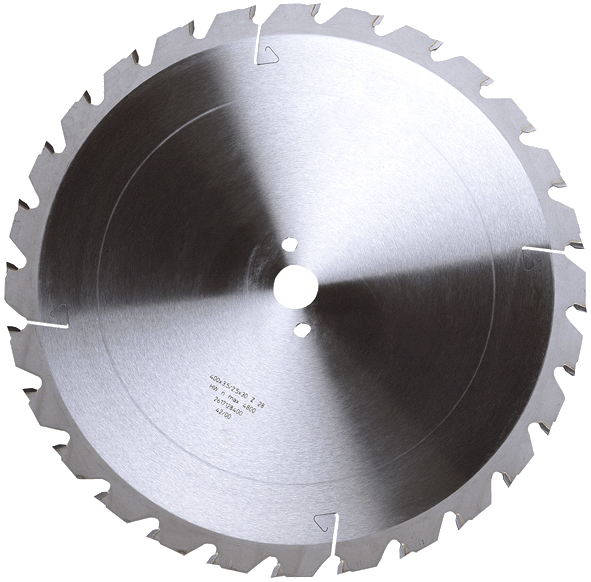
Clean disc knives, saw blades and milling and planing heads using ultrasound to maximise service life

In industrial machining and tool reconditioning, the cleanliness and integrity of the cutting edges play a decisive role in determining manufacturing precision and tool life. High-performance precision tools such as disc knives, saw blades and complex milling and planing heads are subjected to high thermal and mechanical stresses during use, as well as continuous exposure to cooling lubricants and resins.

Conventional mechanical methods quickly reach their limits when it comes to removing this heavy contamination, and risk damaging the delicate geometry of the tools. By cleaning disc knives, saw blades and milling and planing heads using ultrasound, you are instead relying on a high-precision physical process. The non-contact cavitation effect penetrates even the smallest gaps and plate seats to completely dislodge stubborn carbon deposits, polymer residues and firmly adhered metal abrasion, whilst being gentle on the material.

Safely protect delicate cutting edges and expensive coatings

In contract manufacturing, every minute of service life counts when it comes to expensive cutting tools. When operators clean encrusted milling cutters or saw blades using traditional methods such as stiff brushes or scrapers, there is a high risk that the delicate cutting edge will chip away at a microscopic level. The tool becomes blunt before it has even been reinserted into the machine spindle. Ultrasonic cleaning solves this problem entirely without any physical contact. In the cleaning bath, high-frequency sound waves generate millions of tiny vacuum bubbles that implode directly on the dirt. This process, known as cavitation, simply blasts away stubborn residues whilst leaving the tool’s solid base steel completely unaffected.

Another major concern in many companies is the worry about expensive tool coatings such as titanium nitride (TiN) or diamond-like carbon (DLC) coatings. However, when using ultrasound, this concern is unfounded. These coatings have been bonded extremely firmly to the tool steel during the manufacturing process. Whilst the physical force of the cavitation bubbles in the BANDELIN SONOREX high-performance bath is strong enough to reliably dislodge caked-on swarf and resins, it is by no means sufficient to damage an intact coating. The expensive finish remains fully intact.

Safety for soldered joints on circular saw blades and composite tools

When reconditioning assembled circular saw blades, the chemical and physical resistance of the brazed joints between the base blade and the carbide teeth is a critical safety factor. Contrary to common assumptions, the ultrasonic frequency itself does not pose a threat to the structural stability of these joints.

Process safety is primarily controlled by the choice of cleaning chemicals. Whilst strongly alkaline cleaners could attack the solder if used incorrectly, the use of specially formulated products guarantees the gentle removal of resins and burning residues. Precise control of the bath temperature and concentration prevents chemical diffusion processes at the solder joints, thereby ensuring the operational reliability of the saw blades during subsequent high-speed use.

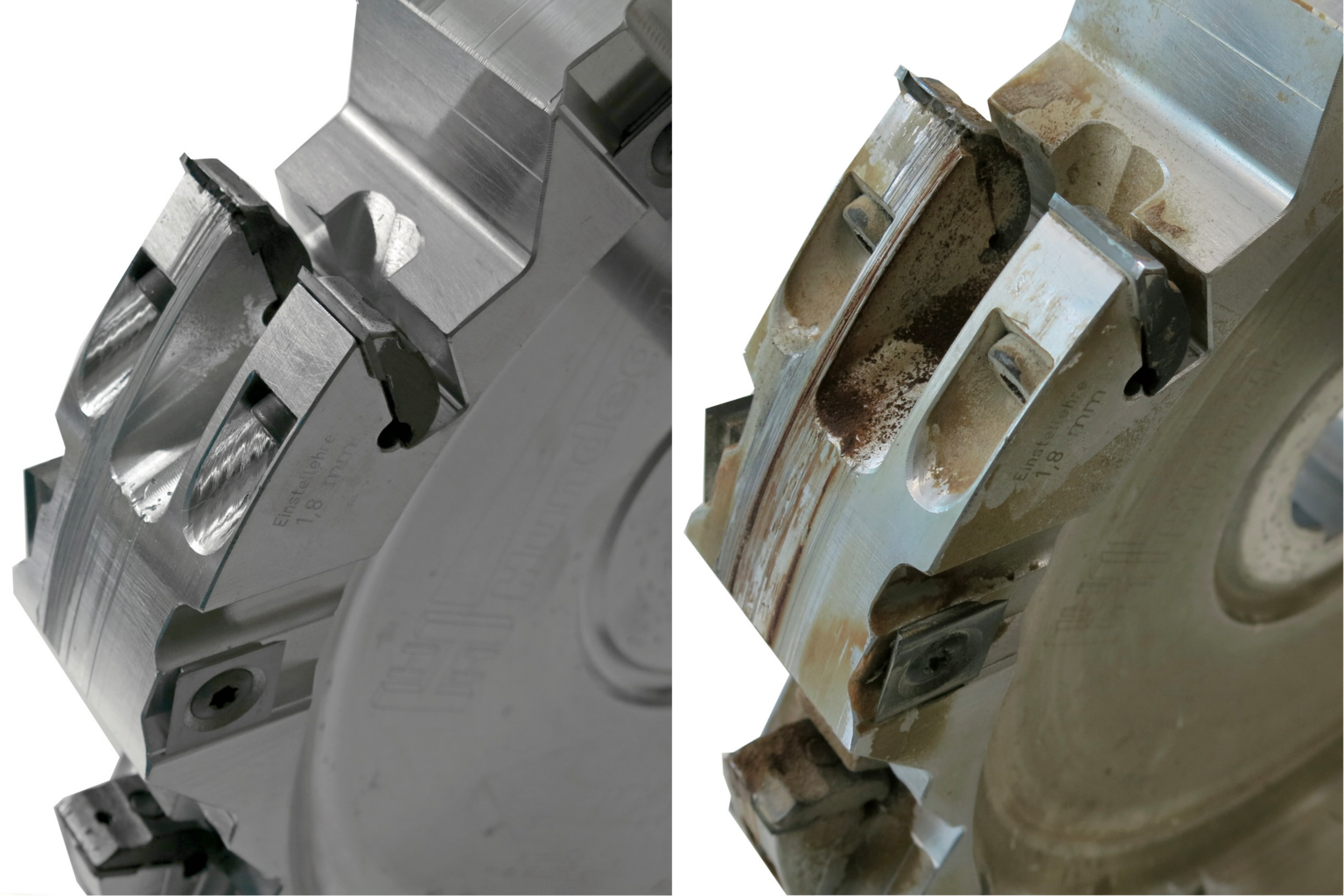
Before

Afterwards

Ultrasound cleaning

Precise fit of indexable inserts for perfect milling results

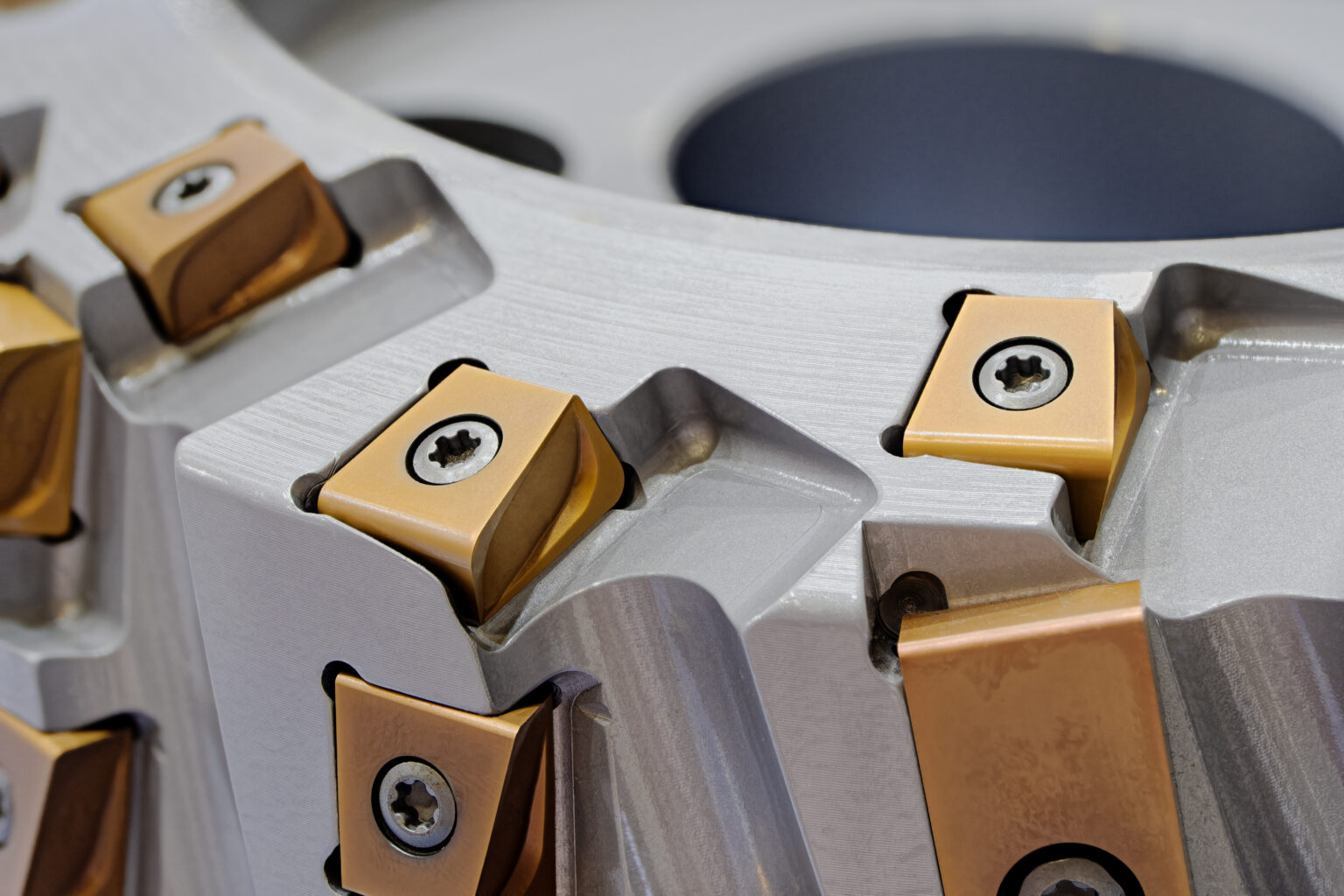
A key advantage of ultrasonic technology becomes apparent during the maintenance of milling tools with indexable inserts. If the insert seat is contaminated by dried-on cooling lubricants or microfine chip debris, the newly fitted insert will no longer lie perfectly flat. The result: this specific cutting edge protrudes slightly further than the rest of the milling cutter’s cutting edges. It does the bulk of the work during machining, wears out significantly faster and introduces microvibrations into the process. This is immediately evident on the workpiece in the form of unsightly chatter marks and a poor surface finish.

Cavitation in the ultrasonic bath tackles this problem at its root. It cleans even the sharpest internal corners and the threaded bores of the insert seats completely free of emulsion residues and micro-chips – without any mechanical scraping that could damage the seat. As a result, the new indexable inserts fit flush and sit perfectly against the seat. This ensures precise, uniform cutting action across all inserts, maximises their service life and guarantees consistently high-quality workpiece surfaces.

Protect the aluminium milling body from etching

To reduce the weight on the machine spindle, many large milling bodies or cutter holders are now made from high-strength aluminium. When cleaning these tools, a costly mistake is often made in day-to-day use: if they are placed in an overly aggressive, alkaline cleaning bath – one that is actually intended for pure steel components – the chemicals attack the aluminium. The metal becomes etched. Particularly with aluminium containing silicon, a black, greasy layer quickly forms, which makes the expensive tool unsightly and has to be laboriously wiped off again.

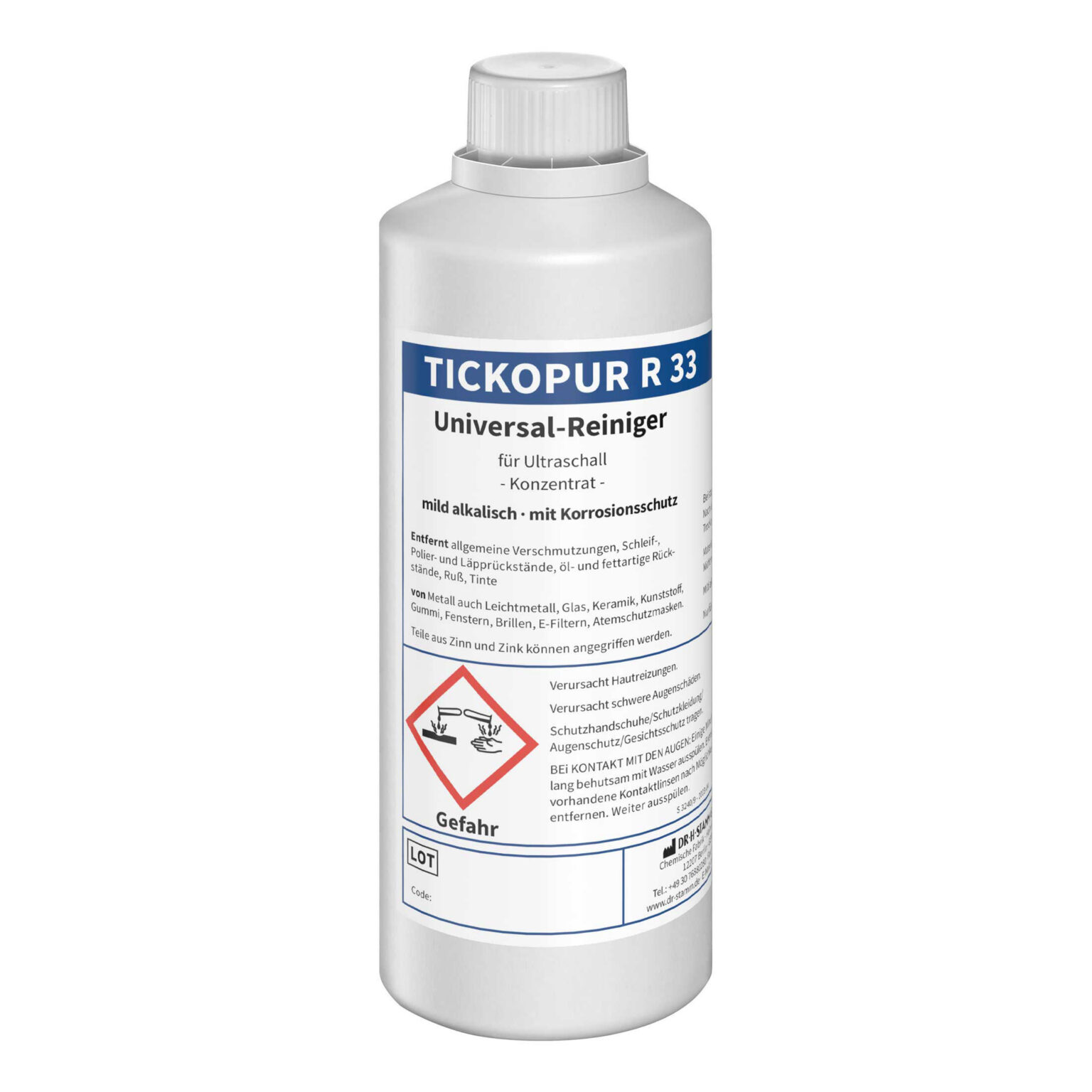
To ensure that the bonded steel cutting edges are cleaned thoroughly whilst the aluminium of the carrier body remains undamaged, it is essential to use the right cleaning agent. By using a material-compatible solution such as TICKOPUR R 33 in the BANDELIN ultrasonic bath, you can clean even these composite tools with complete confidence. Steel and aluminium can thus be cleaned in a single operation without the soft light metal tarnishing or being damaged.

Example application in the video

We have put together an overview of sample cleanings for you to carry out an optimal US cleaning.

Post-treatment for long-lasting corrosion protection

Machining tools are often made from tool steels that are susceptible to corrosion. After ultrasonic cleaning, the metal surface is free of protective oil films. Although the BANDELIN cleaning agent TICKOPUR R 33 contains temporary corrosion protection additives, these are water-soluble and are not sufficient for long-term storage in the tool magazine.

To ensure they are properly preserved for storage, the tools must be left to dry completely after being rinsed clean. If the cutters or saw blades are reinserted into the machine immediately after cleaning, renewed contact with the cooling lubricant emulsion will provide corrosion protection. For storage, however, additional preservation using suitable anti-corrosion oils or waxes is absolutely essential in order to maintain the surface quality achieved in the ultrasonic bath until the next use.

To ensure reliable cleaning of your cutting tools, the ultrasonic power, chemicals and temperature must be precisely calibrated. Our application specialists will be happy to assist you in selecting the optimal BANDELIN system components for your specific tool geometries and levels of contamination.

The right products for every application

  • SONOREX TECHNIK RM 40.2 UH Ultrasonic bath with overflow pocket and heater

    SONOREX TECHNIK RM 40.2 UH Ultrasonic bath with overflow pocket and heater, 40 kHz

    4.495,00 € (plus Shipping & VAT) Commercial customers only

    excl. 19% VAT

    plus Shipping costs

    Add to basket
  • SONOREX TECHNIK HA 40 planing head holder image

    SONOREX TECHNIK HA 40 planing head fixture

    2.764,00 € (plus Shipping & VAT) Commercial customers only

    excl. 19% VAT

    plus Shipping costs

    Add to basket
  • TICKOPUR R 33 Universal cleaner for ultrasonic cleaning

    TICKOPUR R 33 Universal cleaner for ultrasonic cleaning, concentrate

    25,00 € - 1.320,00 € (plus Shipping & VAT) Commercial customers only

    excl. VAT

    plus Shipping costs

    Select options This product has multiple variants. The options may be chosen on the product page

FAQ on the industrial cleaning of cutting tools

No, because the ultrasonic waves do not affect the microscopic geometry of the cutting edge. However, to prevent mechanical damage caused by contact with the stainless steel basket, disc knives should be stored on silicone-studded mats. This prevents the sharp edges from striking hard metal whilst the machine is vibrating.
Ultrasonic baths are ideal for cleaning emulsions and cutting oils. Pre-cleaning is not usually necessary. The cavitation effect emulsifies the oils in the cleaning fluid, whilst the service life of the bath can be significantly extended by fitting oil separators to the units.
Exceeding the recommended concentration (usually 3 to 5 %) does not offer any linear time benefit. Once the liquid reaches a certain saturation point, cavitation is actually suppressed because the viscosity of the solution increases too much. Precise dosing in accordance with our manufacturer’s specifications is therefore the optimal approach, both technically and economically.
A cleaner that is compatible with the material and approved for use on non-ferrous metals and aluminium must be used. Harsh, strongly alkaline cleaners can corrode aluminium surfaces and cause unsightly discolouration. The combination of SONOREX technology and TICKOPUR R 33 provides the necessary assurance in this regard.

Join us in

CONTACT

E-mail

info@bandelin.com

Give us a call!

+49 30 76880-0

Address

Heinrichstraße 3-4, 12207 Berlin

Bandelin Electronic

Quality since 1955

We - a Berlin-based family business in its third generation - specialise in the development, manufacture and distribution of ultrasonic devices, corresponding accessories and application-specific cleaning and disinfection preparations. The high vertical range of manufacture, a modern production facility and motivated employees distinguish us and are guarantors for constantly new quality products.

EN