Homepage » Applications » Cleaning tableting punches using ultrasound

Cleaning tableting punches using ultrasound

In pharmaceutical manufacturing and the chemical industry, modern tablet presses combine enormous pressing forces with microscopic precision. The upper and lower punches produce thousands of tablets per minute, with pressing forces sometimes exceeding 100 kN. To ensure consistently reproducible results and a high degree of dimensional accuracy, this process requires the tools to have an absolutely residue-free, flawless surface.

High-frequency sound waves have proven to be a highly effective method for gently and efficiently cleaning even the most delicate logo engravings and complex dies after every batch change. When you clean your tableting punches using ultrasound, you utilise the physical principle of cavitation to achieve a completely contact-free, shape-preserving deep clean. Find out how, through precisely controllable parameters, you can measurably optimise your cleaning processes, preserve surface coatings in the long term and lay the foundations for GMP-compliant cleaning validation.

Material specifications for tableting tools

A standard tool set for modern rotary presses consists of an upper punch, a lower punch and a precisely fitted die. To withstand the cyclic stresses during the pre-compression and main compression phases over the long term, these components are manufactured from special high-alloy cold-work steels or powder metallurgical (PM) steels. PM steels offer particularly high wear resistance due to their homogeneous carbide distribution. To ensure a smooth tableting result and optimum ejection forces, the pressing surfaces have extremely low surface roughness values (usually Ra < 0.1 µm) and are polished to a mirror finish. Furthermore, many punch heads feature complex geometries in the form of break lines, intricate company logos or alphanumeric dosage codes.

Even microscopic contaminants in these sensitive areas noticeably alter the compression profile. Powder residues on the die wall or on the punch affect the exact fill volume and thus the critical mass uniformity of the tablet. At the same time, blocked embossing dies result in irregular surfaces, which are inevitably detected as quality deviations by the automated optical inspection systems of the filling lines.

Equipment recommendations and operating parameters

Depending on the required capacity, the following ultrasonic baths are suitable for the professional cleaning of tableting punches:

Up to 6 tableting punches:

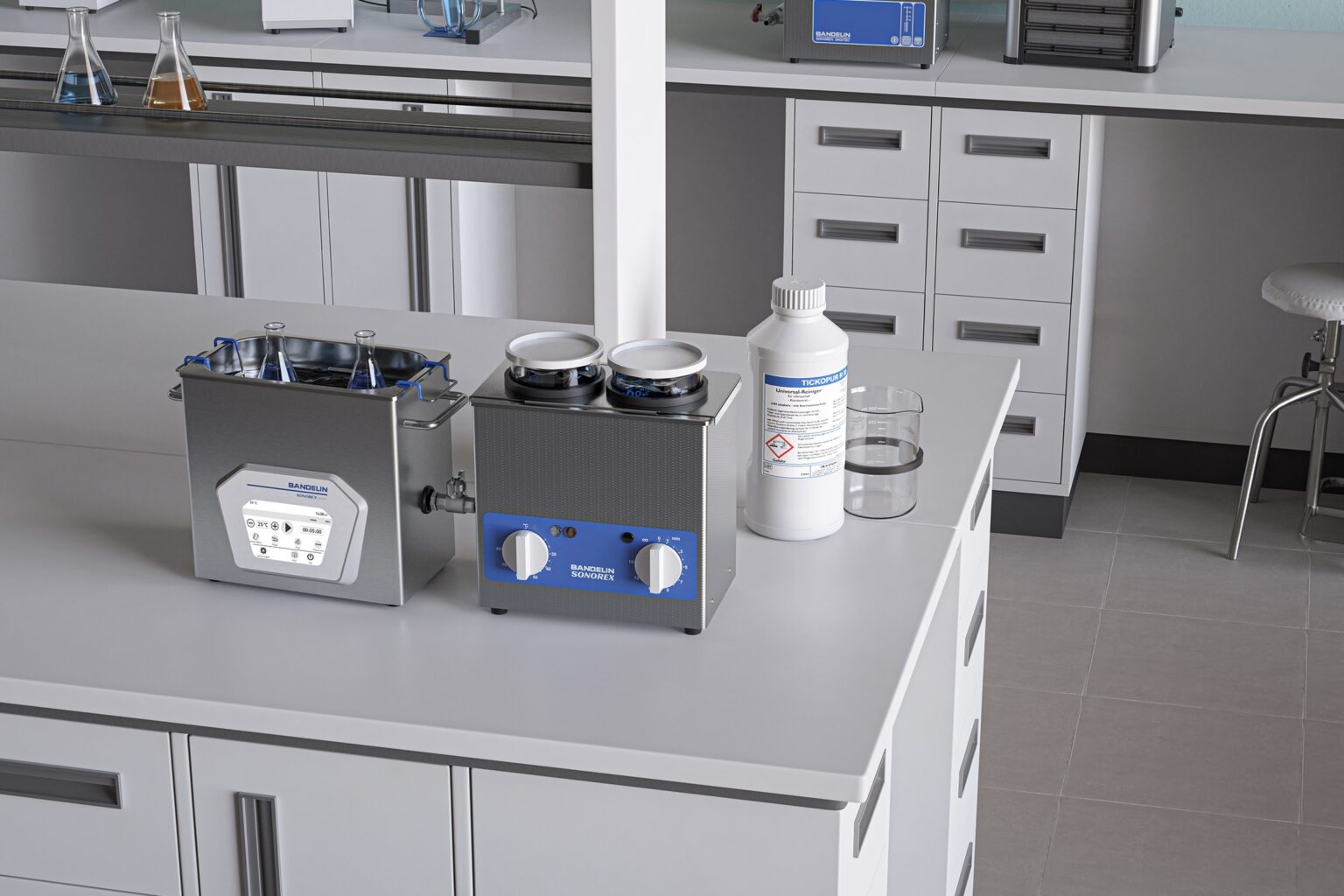
SONOREX SUPER RK 514 BH or SONOREX DIGITEC DT 514 BH

Up to 10 tableting punches

SONOREX SUPER RK 1028 CH or SONOREX DIGITEC DT 1028 CH

When loading the machine, the weight of the tools must be taken into account, as the cleaning baskets used are designed for a maximum load of 10 kg. The optimum cleaning process takes 5 minutes at a temperature of 50 °C, using a 5 % solution of the cleaning agent TICKOPUR R 33.

Causes and risks of sticking and picking in tablet presses

Production technicians face an enormous challenge with every batch change. Pharmaceutical formulations consist of the active pharmaceutical ingredient (API) and various excipients, such as binders, fillers or lubricants, for example magnesium stearate. Under high pressure, these mixtures tend to form physical and chemical bonds with the metal surface of the punch.

If these residues are not 100 per cent removed between production runs, two undesirable phenomena occur in tableting. Firstly, ‘sticking’, where the granules adhere to the flat pressing surface of the punch and cause the tablet surface to crack upon ejection. Secondly, ‘picking’, where material becomes lodged specifically in the fine indentations of the logo engravings.

The standard approach often involves manual cleaning with nylon or brass brushes. This method is disastrous, as even soft bristles, when combined with hard, abrasive powder residues, cause micro-scratches on the polished surface. These scratches increase the microscopic surface area of the metal and act like tiny barbs in subsequent production. Wear accelerates exponentially.

Cavitation as the physical principle behind residue-free deep cleaning

Companies that clean their tableting punches using ultrasound completely eliminate the risk of manual abrasion. The physical principle is based on cavitation in the ultrasonic bath. High-performance ultrasonic transducers from BANDELIN generate high-frequency pressure and tension waves in the cleaning fluid, typically in the range of 35 kHz. During the negative pressure phases, millions of microscopic vacuum bubbles are formed.

When these bubbles implode during the subsequent high-pressure phase, they create locally confined, extreme physical conditions characterised by temperature peaks and jets of liquid that can reach speeds of over 400 km/h. These microjets blast away tightly compressed deposits of active ingredients, sticky binders and stubborn organic deposits directly at the interface between the tool and the contamination.

The key technical advantage lies in the spatial propagation of the sound waves. Cavitation bubbles form wherever there is liquid. This ensures that even areas inaccessible to mechanical tools are cleaned without leaving any residue, such as the sharp inner corners of break notches or the finest radii of an embossed letter.

Preventing abrasion and preserving delicate surface coatings

To reduce friction and wear, high-quality tableting punches are increasingly being treated with special surface coatings. Common options include hard chrome, titanium nitride (TiN), chromium nitride (CrN) or diamond-like carbon (DLC) coatings. These coatings are extremely hard, but are often only a few micrometres thick and are sensitive to localised mechanical stress caused by hard bristles or scrapers.

Ultrasonic cleaning is 100 per cent contact-free. The microjets remove adhering polymers and active ingredients without compromising the structural integrity of the coating. The high gloss of the moulding surfaces is maintained over a prolonged period. This reduces the need for costly re-polishing and extends the service life of the mould sets.

Cleaning validation and GMP-compliant process reliability

In pharmaceutical manufacturing, all cleaning processes are subject to the strict requirements of Good Manufacturing Practice. When changing products, the so-called PDE (Permitted Daily Exposure) values must be strictly adhered to in order to prevent dangerous cross-contamination between different medicines. Manual cleaning is highly operator-dependent and is difficult to validate using measurement techniques.

Processing in a BANDELIN SONOREX high-performance bath, on the other hand, offers reliable process consistency. Key parameters such as water temperature, ultrasonic treatment time and ultrasonic power can be precisely defined, digitally controlled and documented in a reproducible manner for the quality assurance system. This standardisation minimises the risk of human error during the processing of critical components.

Co-ordinated system components for consistent cleaning results

The complex geometry and sensitivity of the moulding tools require a fully integrated system that is perfectly coordinated. BANDELIN draws on over 75 years’ experience in ultrasonic technology to achieve this.

The focus here is on the hardware. The devices in the SONOREX range are fitted with cavitation-resistant stainless steel oscillating tanks and are specifically designed for continuous industrial operation. Functions such as Sweep (frequency modulation for a homogeneous sound field) and Degas (rapid degassing to optimise cavitation efficiency) ensure maximum efficiency during the cleaning process.

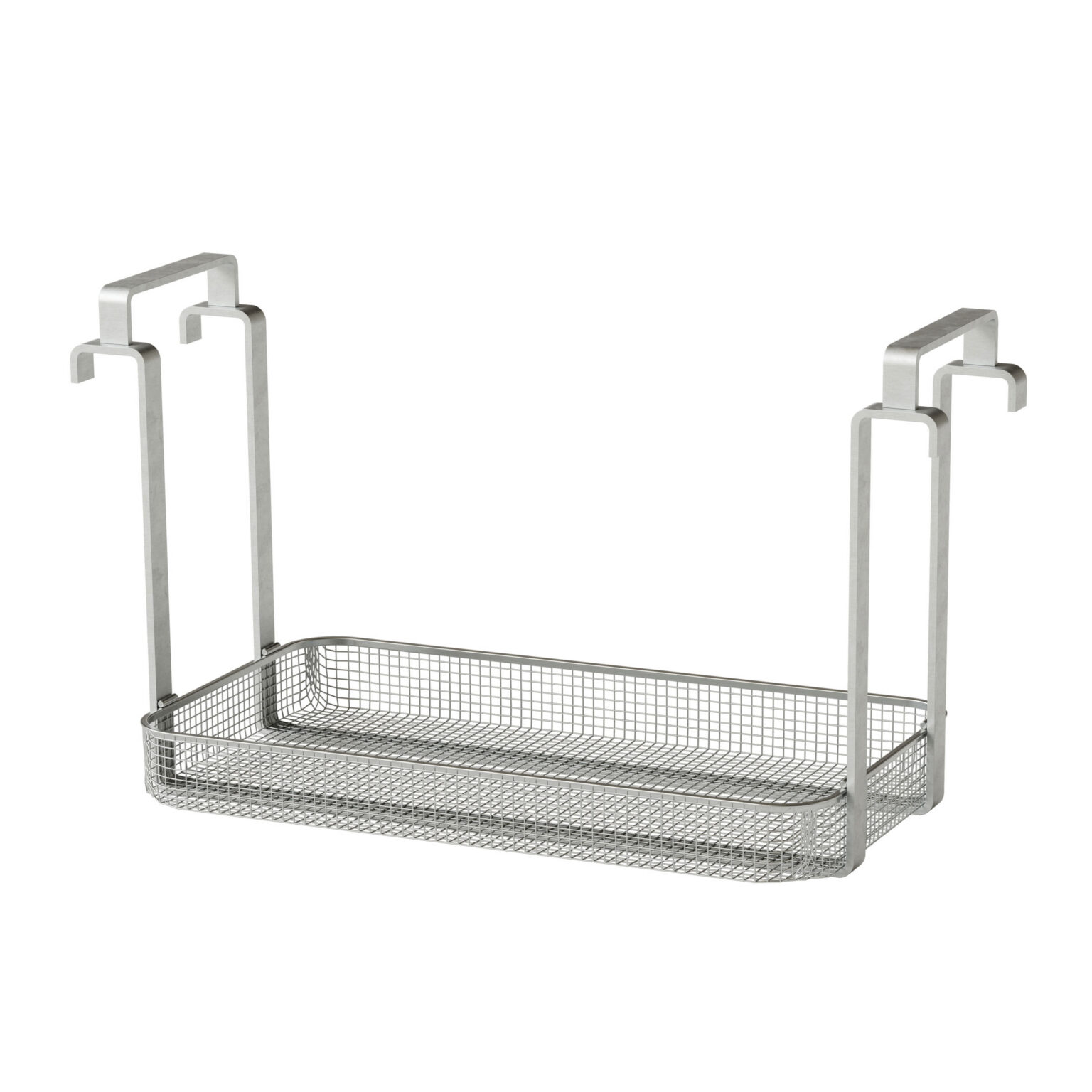
The optional accessories are just as important. Tableting punches must not come into contact with one another during ultrasonic processing, as this could otherwise cause damage to the punch heads. At BANDELIN, we have developed special positioning lids and insert baskets with separators for this purpose. The tools are suspended vertically so that they do not touch one another and are, at the same time, optimally exposed to the ultrasonic field.

Specially formulated cleaning additives provide chemical support for the physical process. The choice of formulation is tailored to the specific stamp material and the type of excipients. Surfactant-based, mildly alkaline cleaners such as TICKOPUR R 33 reduce the surface tension of the water, promote cavitation and keep dissolved particles in suspension to prevent them from redepositing on the metal.

Integration of ultrasonic cleaning into standardised processes

The workflow in the laboratory or preparation room benefits enormously from the inclusion of an ultrasonic bath. Once removed from the press, the punches are roughly cleaned of loose powder and placed in the ultrasonic bath.

The ultrasonic bath is prepared using deionised water and the appropriate dose of TICKOPUR cleaner, heated and degassed using the degassing function. The actual ultrasonic cleaning takes between five and fifteen minutes, depending on how stubborn the binding agents are. During this time, staff can already carry out other set-up procedures on the tablet press. Finally, the punches are rinsed clean and, ideally, dried in a drying cabinet or with filtered compressed air until completely free of residue, to prevent flash rust.

Reliable reconditioning and maintenance of your tableting punches

Integrating a SONOREX high-performance ultrasonic bath into your cleaning process provides long-term protection against mechanical wear for the highly sensitive polishes and coatings on your tableting tools. Thanks to the non-contact cavitation effect, which penetrates right down to the finest embossed engravings, you proactively prevent quality-compromising material build-up and ensure reproducible, validatable cleanliness for the next production batch.

Standardise your cleaning process with a precisely tailored system comprising an ultrasonic cleaner, material-friendly hanging racks and the specific TICKOPUR cleaning chemicals. Contact our application specialists for a bespoke needs analysis and find the optimal ultrasonic configuration for the tools in your tablet press.

Frequently asked questions about the proper ultrasonic cleaning of press tools

Ultrasonic cleaning is 100 per cent contact-free. Unlike manual brushing, which can leave micro-scratches on the highly polished pressing surfaces, cavitation is gentle on the sensitive material and thus prevents future material build-up in the press.

In practice, five to fifteen minutes are usually sufficient. The exact duration depends on the compression force of the previous batch, the proportion of sticky binders (such as HPMC) and the temperature of the cleaning fluid.

No. Cavitation acts exclusively on the contamination and the adhesive bonds between the dirt and the metal. Provided the recommended parameters are adhered to and mild chemicals are used, the base material of the dies – which are made of hardened steel – is not affected.
Water freshly poured into the tank contains dissolved gases (air). These gas bubbles act as tiny shock absorbers and absorb the ultrasonic energy before severe cavitation can occur. The Degas function expels these gases from the solution in a matter of minutes, thereby maximising the mechanical cleaning power.
Direct contact with the vibrating tank base causes two problems. Firstly, the solid metal reflects the sound waves, which minimises the cleaning effect at this point. Secondly, the high-frequency vibrations between the punch and the tank wall can cause mechanical damage to the tool and cavitation erosion on the tank. We therefore strongly recommend the use of suitable mounting devices.
Yes. Lubricants such as magnesium stearate often form a stubborn film inside the die bore. The ultrasonic waves penetrate the entire column of liquid inside the die and, in combination with a surfactant-based cleaning agent, reliably dislodge these lipophilic deposits.

Join us in

CONTACT

E-mail

info@bandelin.com

Give us a call!

+49 30 76880-0

Address

Heinrichstraße 3-4, 12207 Berlin

Bandelin Electronic

Quality since 1955

We - a Berlin-based family business in its third generation - specialise in the development, manufacture and distribution of ultrasonic devices, corresponding accessories and application-specific cleaning and disinfection preparations. The high vertical range of manufacture, a modern production facility and motivated employees distinguish us and are guarantors for constantly new quality products.

EN